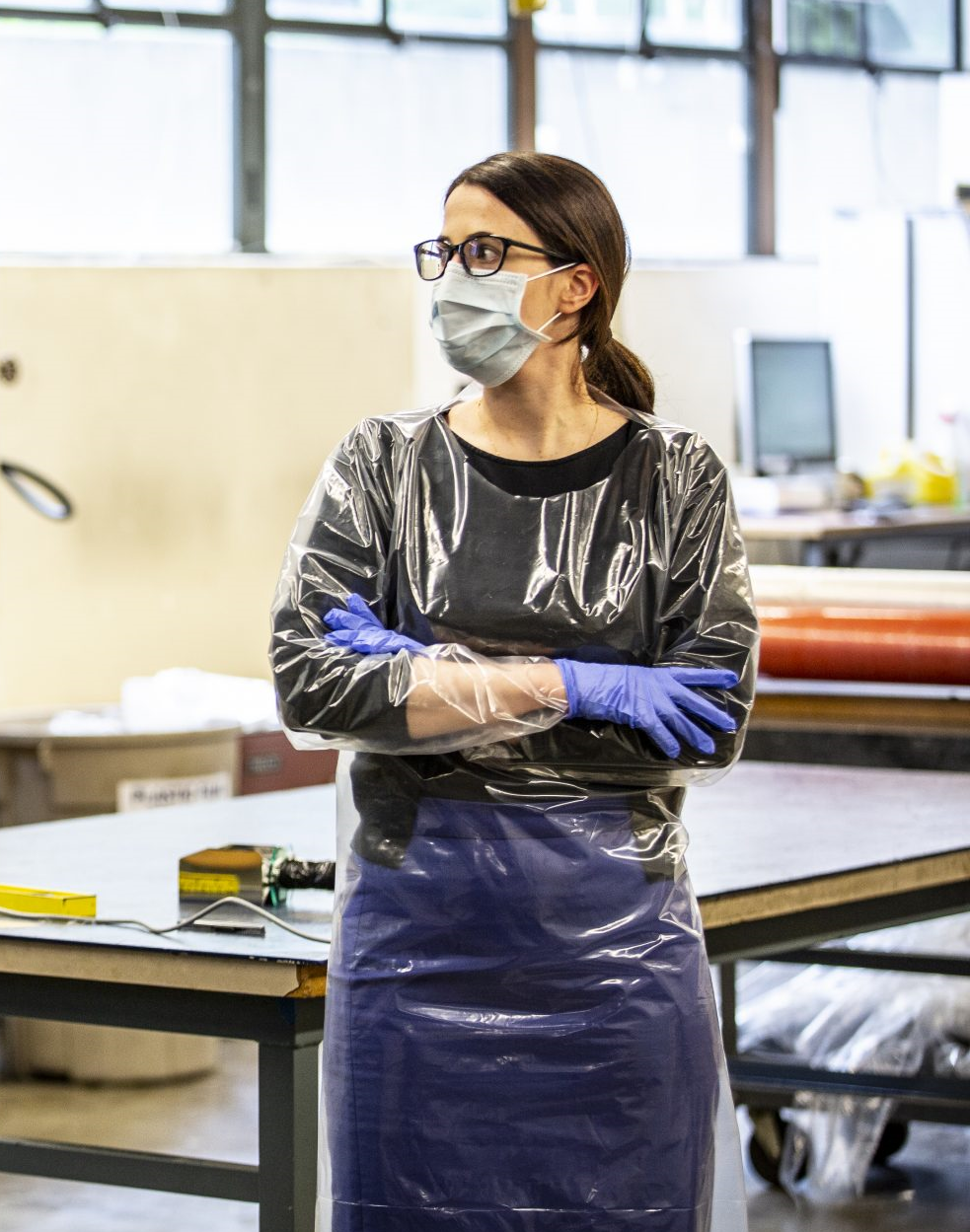
Healthcare workers are exposed to infectious body fluids when working in close proximity to patients. Coughing, sneezing, and retching can expel droplets, which can transmit disease if the healthcare worker’s clothing or exposed skin comes into contact with these fluids [1].
Aerosolizing procedures, such as intubation, are particularly likely to transmit disease without proper protection. A protective gown covers the healthcare worker’s clothing and skin so as to reduce the risk of direct contact with contaminated fluids. Gowns are rated for various levels of protection; choice of gown material and pattern is dependent on matching the level of protection needed to the level of exposure risk [2].
The quickest way to orient yourself to the relevant US standards and agencies is by reviewing the Halyard Health Simplified Guide to Gowns.

Material used, the design of the gown, and the process used for fabrication depend on the intended use of the gown. In the US, gowns fall under FDA regulation. The FDA Medical Gowns page lists the standards for gowns regarding their safety, durability, and protection level (1-4) and expected use.
Fabric/material
Fabric/material influences the level of barrier protection, comfort, and durability of the garment. In addition to the level of protection, a major consideration for choosing an appropriate material is if the gown will be single-use/disposable or multi-use/washable. Unofficial assessments of various materials can be found in the Gown Material section of this document and a guide to the standards can be found in the Standards section of this document.
Design
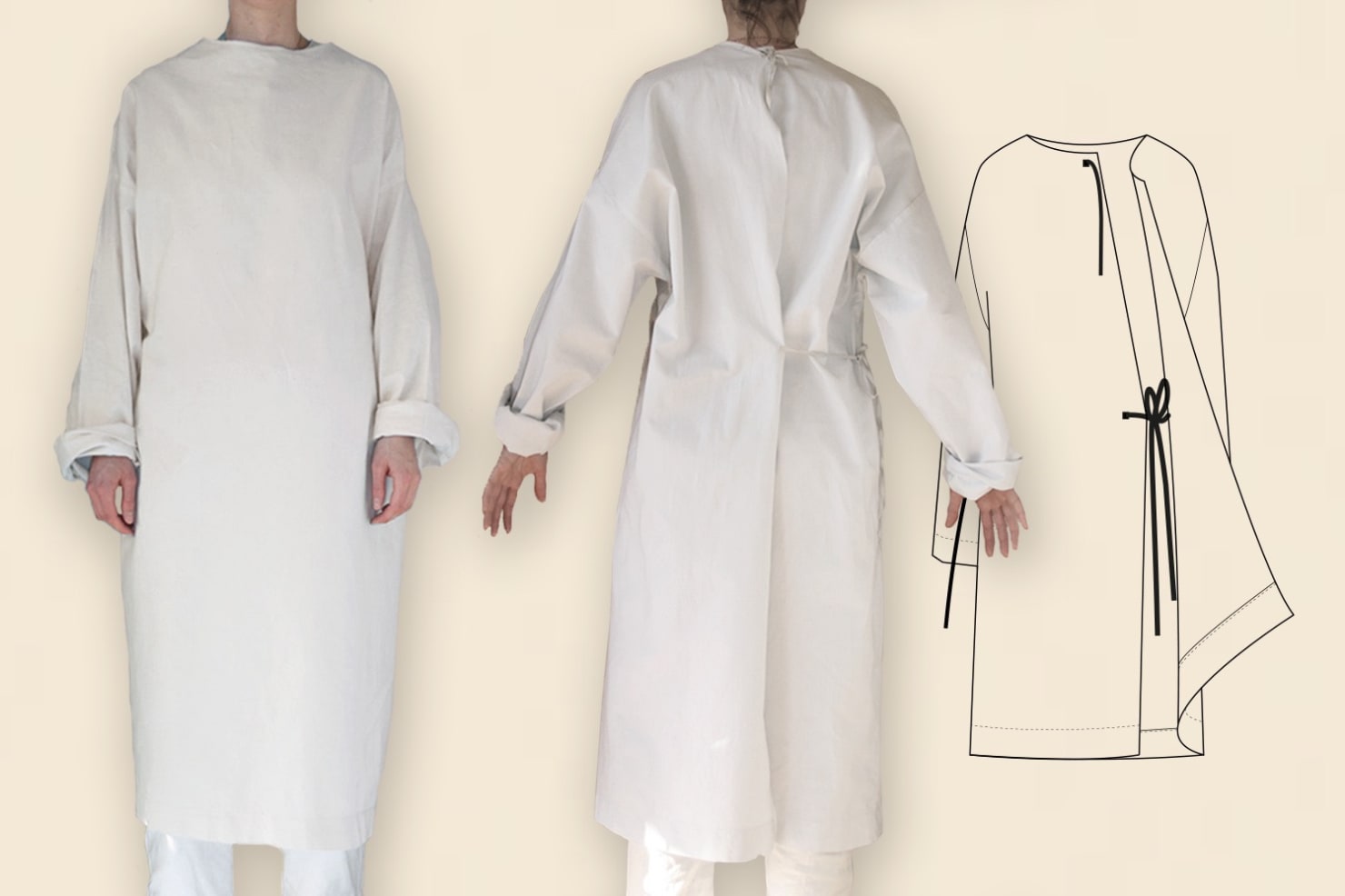
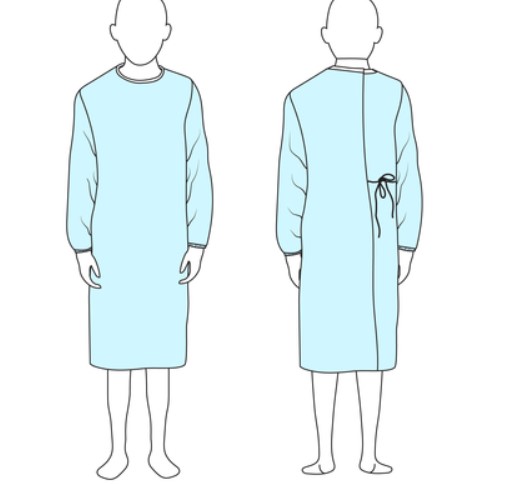
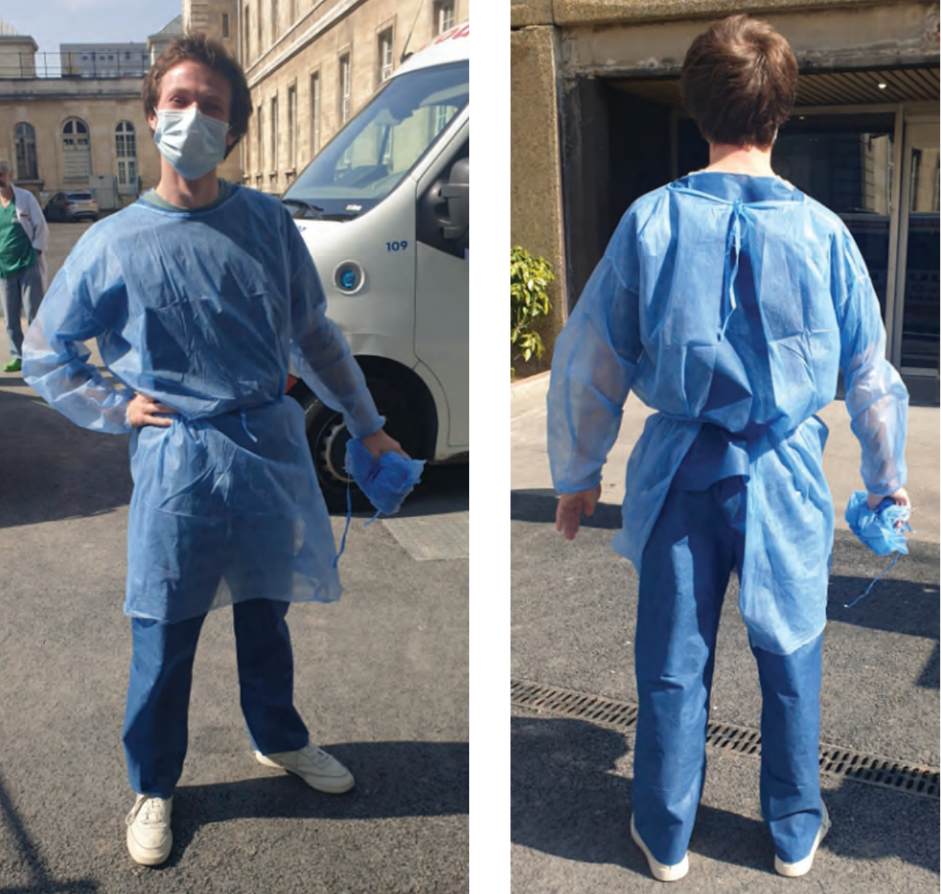
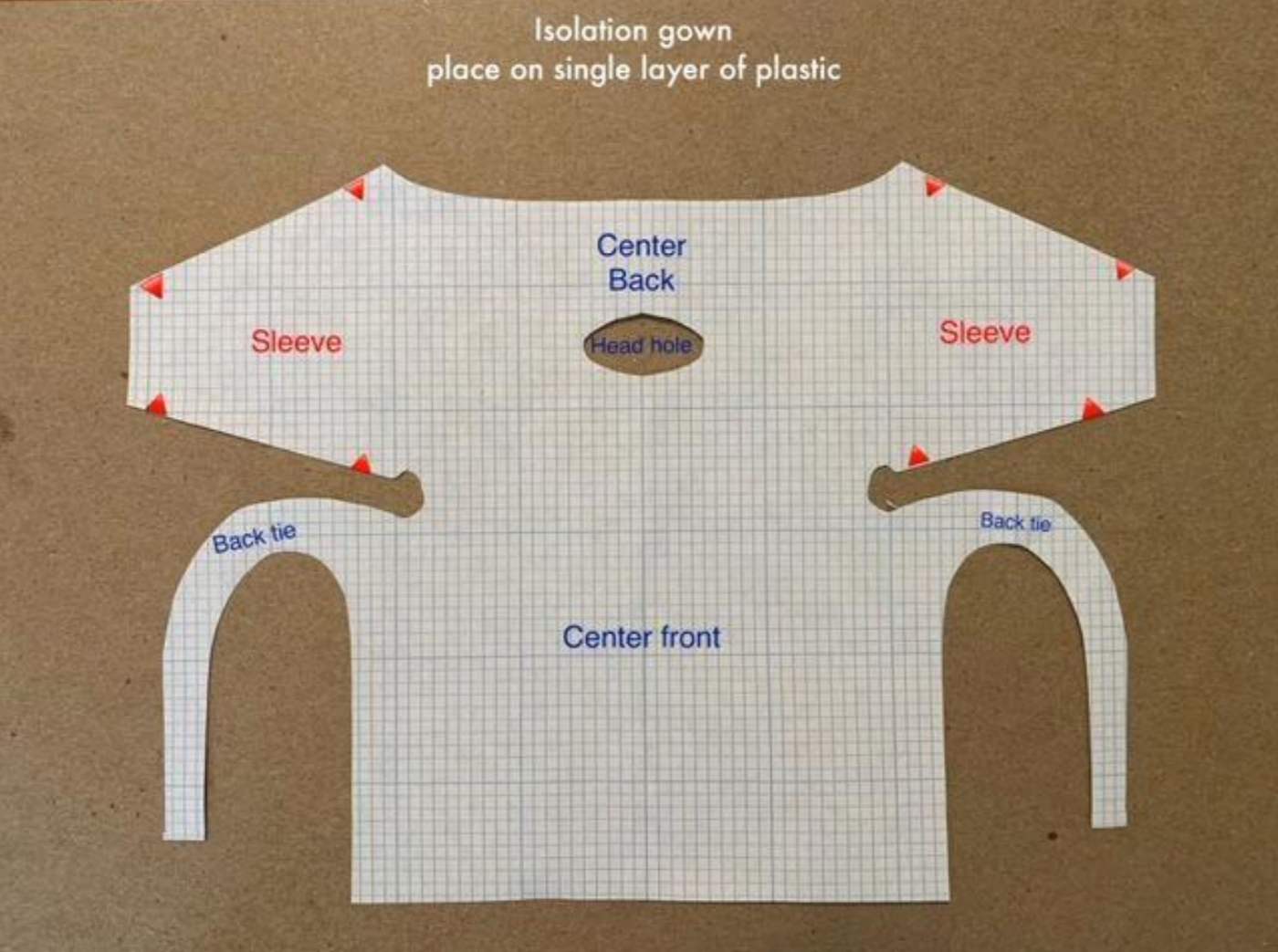
Gown design is related to its intended use. ‘Isolation’ gowns are used in high-risk situations and need to offer full protection to everything between the chest and the knees front and back, including the full arm down to the cuff (FDA).
Ease and safety when donning (putting the garment on) and doffing (taking the garment off) are important considerations; designs may be rejected by facilities if the donning and doffing of a design is overly burdensome.
Labeling of gowns: Per the FDA Enforcement Policy for Gowns, Other Apparel, and Gloves During the Coronavirus Disease (COVID-19) Public Health Emergency there are labeling requirements (please review the guidance in its entirety). For example these requirements from Section C. Non-surgical Gowns and Minimal-to-Low Barrier Protection Surgical Apparel (additional information can be found in the link above):
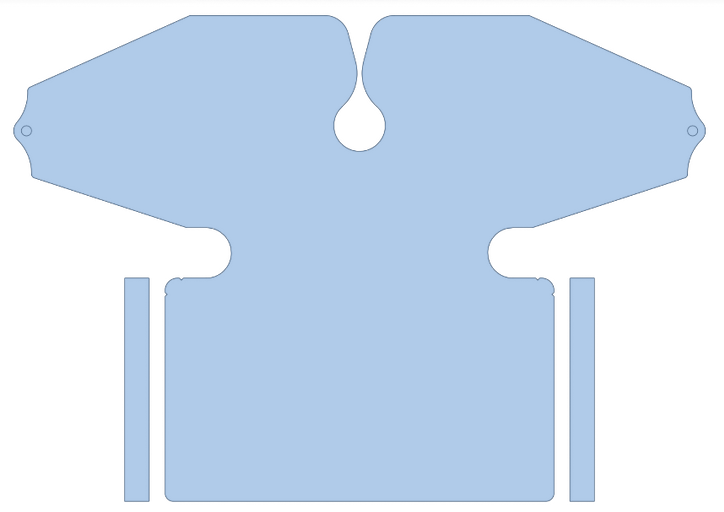
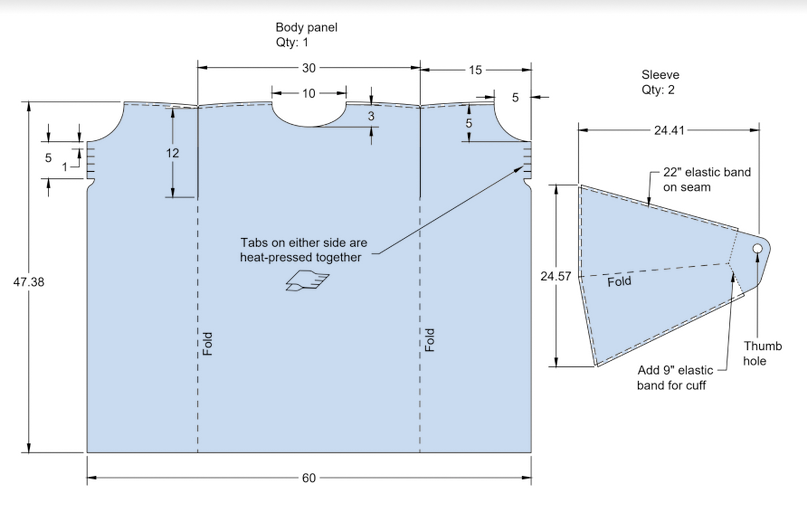
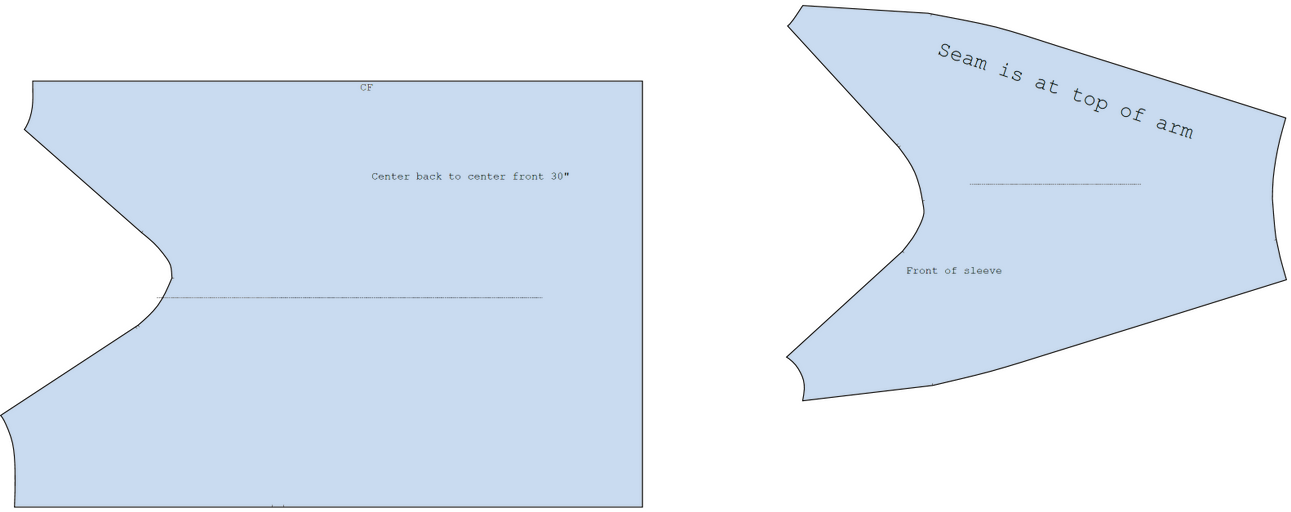
Sewing: Sewing with household machines can be leveraged within most communities to make gowns for local medical facilities. It has the advantage of utilizing equipment and skill sets that are common. It has the disadvantage of being the most labor-intensive approach to gown production and is not suitable for some types of materials. This method is not recommended for single-use items because of the amount of work it takes to sew a gown. Further, repetitive gown production on a non-industrial sewing machine may lead to machine fatigue.
Industrial sewing: Sewing using industrial-grade equipment greatly increases production efficiency but requires specific tooling and pattern file types. This method has the potential to meet higher volume facility needs but may take time before it can be put into place.
CNC router: Often paired with industrial sewing or other industrial production. Certain types of CNC routers can greatly increase cutting efficiency in gown production.
Seam bonding: Often used in conjunction with industrial production of gown materials. Seam bonding greatly increases the barrier protection a gown offers at the seams. Some nonwoven plastics cannot be sewn and must be seam sealed.
Sewing + Seam bonding: Washable woven gowns should be sewn and seam bonded if possible for the combined durability of sewn seams and the liquid barrier properties of seam bonding.
US Standards
Liquid barrier protection is a key consideration for the effective use of gowns. The US ANSI/AAMI PB70 sets forth classifications and requirements for ranking liquid barrier protection in personal protective gowns.
Brief Summary of FDA description of the ANSI/AAMI PB70 standard regarding gown protection levels
The ANSI/AAMI PB70 barrier protection standard is a broad standard that governs the protection level of the garment and guidelines for labeling requirements. A free copy of the standard can be obtained through the AAMI store [ANSI/AAMI PB70:2012].
Summary of the testing covered in the PB70
Level 1: AATCC 42 impact test (less than 4.5g gain)
Level 2: AATCC 42 impact test (less than 1g gain) and AATCC 127 Hydrostatic test (20 cm pressure
Level 3: AATCC 42 impact test and AATCC 127 Hydrostatic test (50 cm pressure)
Level 4: ASTM F1671 simulated blood and virus particle tests (a free copy can be found in their COVID reading room)
Analog Tests to the AATCC 42 and AATCC127
In an effort to support rapidly assessing estimated protection levels of various materials that a producer might have available for gown making analogs to the official tests have been developed by the Future Forge Makerspace. These tests have not been approved by any governing body, OSMS, or the Future Forge for defining protection levels and should only be used by producers and/or medical facilities when no official testing data is available and used at their own risk. The summary of the tests and test analogs can be found here.
Selecting a Design and Material
It is highly recommended that makers/manufacturers work with medical facilities when selecting which designs and materials to use in the production of protective gowns. The selections will be dependent on what manufacturing techniques are available, which materials are available, and which designs will be accepted by facilities.
Simplified Design and Material Selection Flowchart
Gown Material
Due to the crisis PPE needs, many facilities turned to using Tyvek Housewrap for gown making as it was the only protective material available in bulk. Clinical feedback has determined that Tyvek Housewrap is unsuitable for a gown construction as it doesn’t drape well, makes noise, is bulky, and is difficult to wear. Furthermore, DuPont has recommended it not be used for PPE construction as it is not graded for that purpose. To learn more about Tyvek-related products and their PPE indications, click here. To find a DuPont distributor, follow this link. Research facility material choices before using House wrap for isolation gown construction.
Materials List
DuPont 1222A
Ripstop Nylon or Woven Polyester
TyVek House wrap
Polyethylene film
Non-woven polypropylene
Gown Materials Resource Links
1 mil or 2 mil Plastic sheeting
US-based non-woven fabric manufacturers
MMI Textiles Has an entire non-woven, US-made production line
List of medical fabric producers Note the supply chain classification columns. Not every producer will be gown fabric related.
Landscaping Fabric Many of these products have an ASTM specification sheet
TyvekTogether and Material Request Form DuPont release of new PPE-grade material, 1222A, available for purchase to the general public.
OSMS Gown Zoom Call (2020/05/06) YouTube link Information-rich discussion with established and developing gown makers
Virtually MakerFaire Interview (2020/05/23) YouTube link A complete walk-through of Artisan’s Asylum disposable gown production line
How To Convert a Graduation Gown to PPE (2021/11/18) YouTube link A complete guide to making a protective PPE gown from a graduation gown, including creating knit cuffs from donated fabric
Reference for Croatian Study:
Functional Design and Construction of Reusable Surgical Gowns Considering Microbial Barrier
CDC Guidelines for Hospitals/Medical Facilities: How to Use and Preserve PPE During COVID-19 .
The FDA Enforcement Policy is here (official FDA) and here (Foley, 2020/04/06)
Use of Gowns in Healthcare- Premarket Notification Requirements Concern (FDA) Contains some information on FDA expectations for gowns, labeling, and connections to other relevant legal documents (for use when EUA is not in place).
Considerations for Selecting Protective Clothing used in Healthcare for Protection against Microorganisms in Blood and Body Fluids (CDC- NPPTL)
An in-depth look at the CDC’s recommendation for how hospitals/medical facilities assess which gowns to use. Offers many insights into the standards and testing.
Surgical Mask and Gown Conservation Strategies - Letter to Healthcare (FDA)
A guide for how hospitals/medical facilities can conserve gowns during a shortage.
May-Plumlee, T. and Pittman, A., 2002. Surgical gown requirements capture: a design analysis case study. Journal of Textile and Apparel Technology and Management, 2(2), pp.1-10. A textile industry journal review of medical gown designs, materials, and suitability.
General PPE Resources (not gown specific)
Open Source Medical Supplies brings together makers and medical professionals to meet global supply challenges.



.png)
.png)